SEED of THOUGHT: The Chrysanthemum Throne
天皇誕生日 — The Emperor’s Birthday. So it is a perfect time to reflect.
The postwar constitution describes the Emperor as “the symbol of the State and of the unity of the people.” How does this statement hold for you today?
Interrogate the ideas of symbol and unity.
What does it mean for a human being to function as this? Where else — or how else — does one function as a symbol, a unity of the Japanese?
After tossing these larger concepts around, explore the following prompts:
日本語訳を見る
月曜日は天皇誕生日。いま一度、立ち止まって考えてみるのにふさわしい日です。
戦後の憲法は、天皇を「日本国の象徴であり、日本国民統合の象徴」と定めています。 この言葉は、いまのあなたにとってどのような意味を持っていますか。
象徴(symbol)とは何か。 統合(unity)とは何か。
一人の人間が「象徴」として存在するとは、どういうことなのでしょう。 ほかに、あるいはどのような場面で、人は「象徴」や「統合」の役割を担うのでしょうか。
こうした大きな問いをひと通り考えたうえで、次の問いにも向き合ってみてください。
■ Conversational Framework
Convene a family meeting. Take stock of your ideological closet.
Wrestle with questions like:
- In what way would your sense of Japanese-ness change if the nation's symbolism changed?
- Can neutrality be powerful?
- Does tradition stabilize — or ossify?
Try to articulate your thoughts in English. If that feels forced, speak in expansive, deliberate Japanese.
日本語訳を見る
今日は「家族会議」の時間です。 自分の価値観や立場を、少し棚卸ししてみましょう。
たとえば、こんな問いです。
- もし国の象徴が変わったら、あなたの「日本らしさ」の感覚はどう変わるでしょうか。
- 中立であることは、力になり得るでしょうか。
- 伝統は社会を安定させるものですか。それとも、硬直させてしまうものですか。
できれば英語で考えてみてください。 難しければ、普段より少し丁寧で深い日本語で向き合ってみましょう。
■ A Collection of Helpful Vocabulary
sovereignty
Supreme authority — who ultimately “rules.”
ceremonial
Formal, symbolic rather than executive.
continuity
Unbroken persistence through time.
legitimacy
Public recognition of rightful authority.
abdication
Voluntary stepping down from power.
nonpartisan
Not aligned with political factions.
imperial regalia
Sacred objects that signify authority.
misogyny
Prejudice against women.
divine right
The doctrine that authority derives from God.
bloodline
Lineage traced through ancestry.
anachronism
Something that appears out of its proper historical time.
語彙の日本語ヒントを見る
sovereignty(主権)
ceremonial(儀礼的な)
continuity(連続性)
legitimacy(正統性)
abdication(退位)
nonpartisan(超党派の)
imperial regalia(三種の神器などの皇位の象徴)
misogyny(女性蔑視)
divine right(王権神授説)
bloodline(血統)
anachronism(時代錯誤)
■ Make It Real
- Visit the outer grounds of the Imperial Palace and observe who gathers there — and why.
- Read Article 1 of the Japanese Constitution. Does it sound like a Japanese voice?
- Observe — on YouTube, if need be — one ceremony conducted by the Imperial Household this year.
- Sketch the chrysanthemum crest and reflect on its geometry — and how it came to symbolize the world’s oldest continuous royal lineage.
- Record a 60-second voice memo answering: What holds a nation together?
If you post publicly, tag Living English; but as always, privacy is respected.
Place your reflection somewhere deliberate. A notebook. A folder. A space that signals seriousness.
And happy birthday to the Emperor.
日本語訳を見る
-
皇居の外苑を訪れ、どんな人が集まっているのか観察してみましょう。
-
憲法第1条を読んでみましょう。その文章は、あなたにとって「日本の声」に聞こえますか。
-
必要であればYouTubeなどで、今年行われた宮中行事を一つ見てみましょう。
-
菊花紋章を描いてみてください。その形がどのように象徴となったのかも考えてみましょう。
-
「国をひとつにしているものは何か?」という問いに、60秒で音声メモを録ってみましょう。
公開する場合は Living English をタグ付けしてください。 もちろん、非公開でもかまいません。
自分の考えを、大切に扱える場所に置きましょう。 ノートでも、フォルダでも。 きちんと向き合うと決めた空間に。
そして、天皇陛下のお誕生日に。
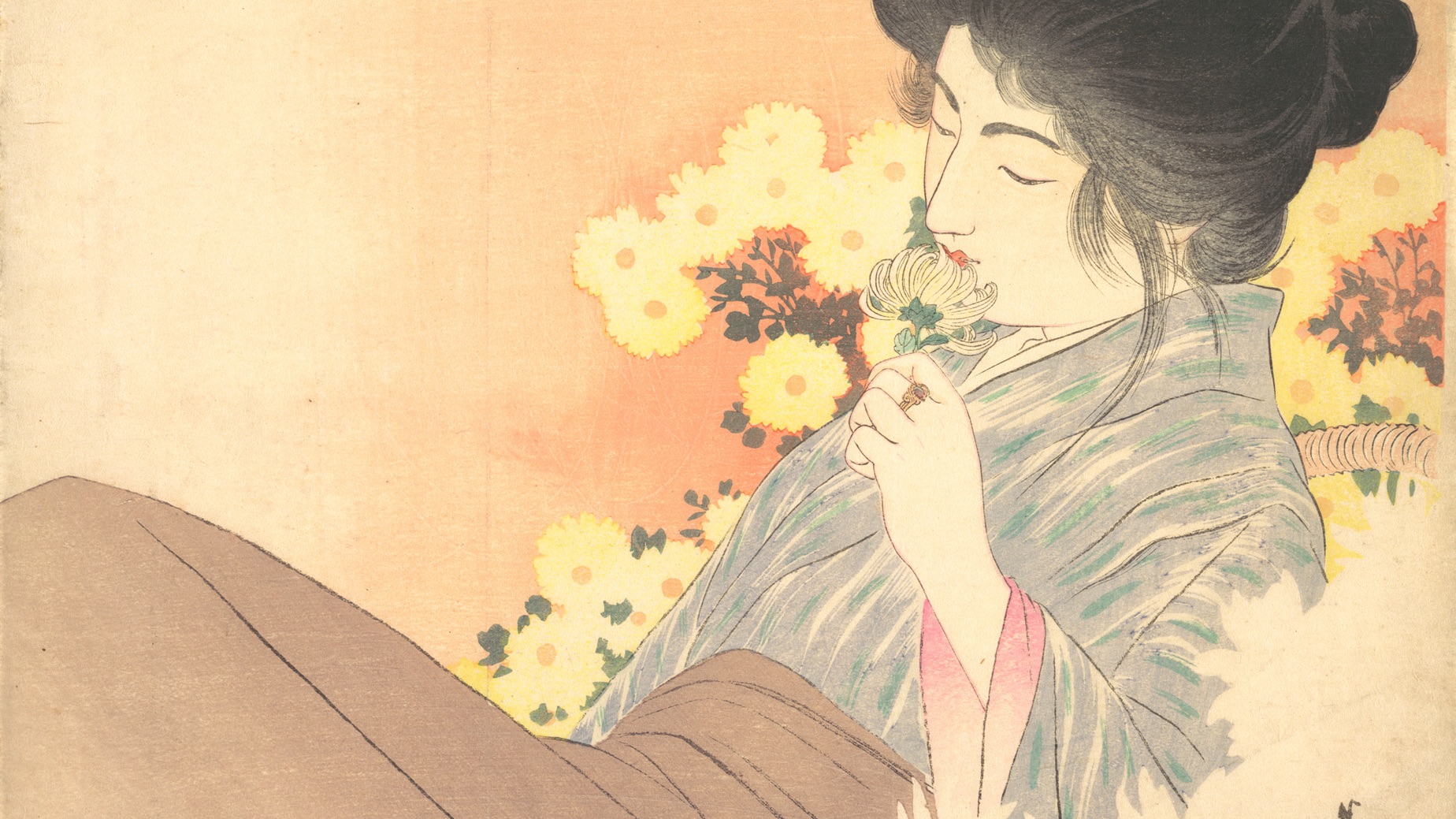
IMAGE: White Chrysanthemums (kiku no kaori -1902), Kajita Hanko
Author