春の約束と黄砂を読み解く英語ガイド
Spring Promises and the Yellow Sand
Heading Toward the Flowers
1. Set the Stage
Touch Here for English
I will admit: 穀雨 is not a term I carry with me. And when I encounter it, there is a moment of pause. It feels distant from everyday life. Because April, at least in my experience of Japan, is not especially rainy. That comes later—with 梅雨.
What defines this period instead is something far less settled: shifting temperatures, unstable skies, and air often tinged with yellow haze as 黄砂 drifts across the horizon.
And yet, that familiar idea persists. In the West, it takes the form of the refrain: April showers bring May flowers.
It is a neat idea—a comforting sequence. But like many inherited expressions, it does not always align with lived experience.
In the Native Links section, you will move between these perspectives, tracing how each expression came to take shape—through history, weather, and culture.
Watch how the same season is described.
Listen to how it is remembered.
Read how it is explained.
And then consider: what does April actually feel like—where you are?
A fitting end to spring proper.
正直に言うと、穀雨という言葉は自分の中にあまり馴染みがありません。目にしたとき、少し立ち止まる感覚があります。どこか日常から離れているように感じられるのです。というのも、日本での私の体感では、4月はそれほど雨の多い時期ではないからです。雨が本格的に続くのは、むしろ梅雨に入ってからです。
この時期を特徴づけているのは、むしろ落ち着かなさです。気温は揺れ動き、空模様も安定せず、黄砂が流れ込んで、空気がうっすら黄色がかって見えることもあります。
それでも、あの馴染みのある考え方は残っています。西洋では、それが「April showers bring May flowers(4月の雨が5月の花を育てる)」という言い回しとして表れます。
きれいにまとまった発想です。心地よい流れでもあります。ただ、こうした言い伝えは、必ずしも実際の感覚とぴったり重なるとは限りません。
Native Links セクションでは、こうした異なる視点を行き来しながら、それぞれの表現がどのように形づくられてきたのかをたどっていきます。背景にある歴史や気候、文化にも目を向けてみてください。
同じ季節が、どのように語られているか。
どのように記憶されているか。
どのように説明されているか。
それらを見て、聞いて、読んだうえで、考えてみてください。あなたにとって、4月とはどんな感覚でしょうか。
晩春への入り口として、ちょうどよいテーマかもしれません。
次のステップ
全文・音声・語彙解説・文法ポイント・クイズ・スラッシュリーディングは、
すべて会員向けコンテンツとしてご覧いただけます。
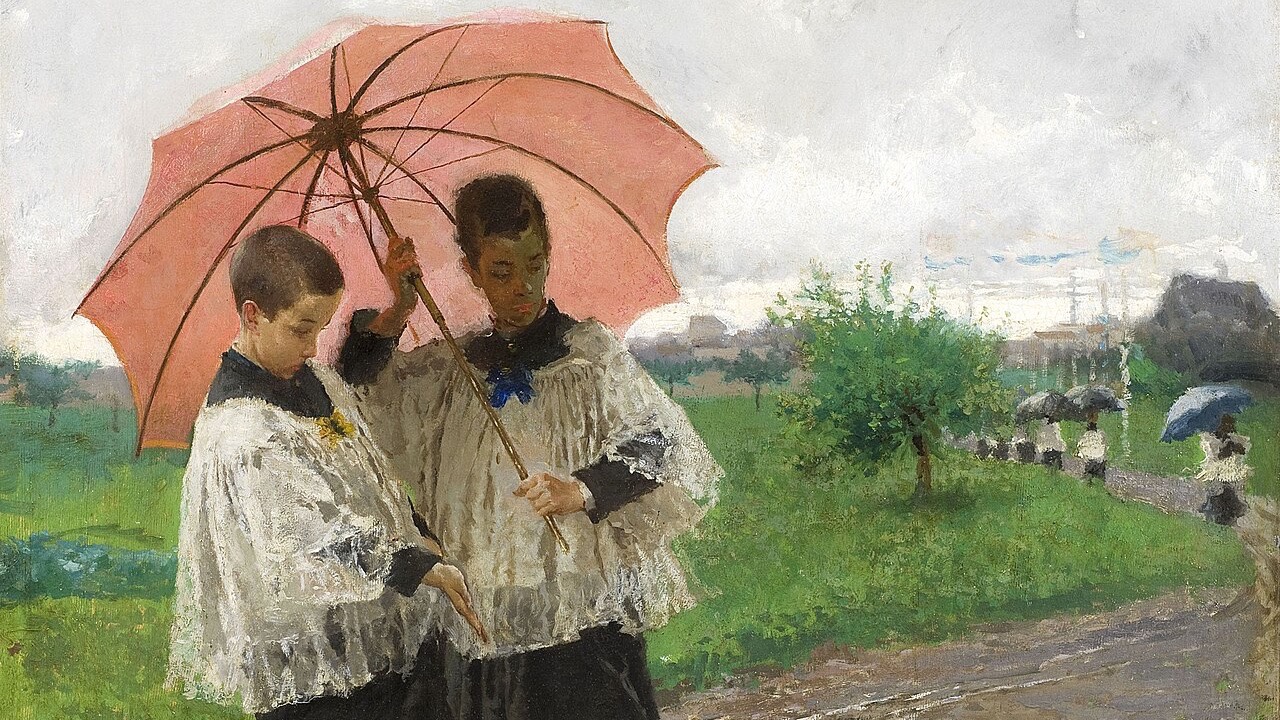
IMAGE: The Return from the Festival (1880), Mosè Bianchi
Author