生と死のあいだに残る「絆」を入り口に、このLanguage Guideでは次のような内容をお楽しみいただけます。
- 人とのつながり・記憶・喪失をめぐる語彙とコロケーション
- 作品を深く味わうためのGrammar Points
- Mr Derekによる記事音声と、Study Portalのアクティビティで理解を深める
- Les Misérablesからヘミングウェイ、詩、そしてアートへ――私たちを結ぶものをたどる小さな知の旅
読むたびに思いがけない気づきがあり、英語の表現が少しずつ自分のものになっていく。そんな体験を大切にしています。
The Bonds Among Us
私たちを結ぶ絆
下記の英文を日本語で読む
魂たち。見守られ、大切にされている存在たち。そして、苦しみ。
「窓辺に浮かぶ幻の顔。床に落ちる幻の影。」
この曲は、フランスの作家ヴィクトル・ユゴーの大作をもとにした壮大なミュージカルLes Misérablesの一曲、Empty Chairs at Empty Tablesです。そこに描かれるのは、生と死のあいだにある、どこか一方通行のような感覚です。ここでのMr. Antoineの歌声を通して、後悔、そして罪悪感さえも含んだ重みが、ひしひしと伝わってきます。何かがどうしても正しくない、という告白。以前より貧しくなってしまった人生。自分だけが生きていることへの罪悪感。そして、「彼ら」がまだそこにいるように思えてならない、言葉にできない感覚。「彼ら」の声が聞こえる。存在を感じる。でも、本当には、そこにはいない。
その疑いに対して、アメリカ文学の巨匠アーネスト・ヘミングウェイは、私たちを慰めるように、そして、そう感じることは決して思い込みではないのだと語りかけます。息子を亡くした友人夫妻に宛てて、彼はこう書きました。
「本当の意味で生きている人は、ごくわずかしかいない。そして、そういう人たちは決して死なない。たとえこの世を去ったとしても。あなたが愛する人は、決して死ぬことはない。」
The spirits. The beings being looked over, cared for. The torments.
Phantom faces at the windows. Phantom shadows on the floor.
The song is Empty Chairs at Empty Tables from the epic musical Les Misérables, based on the masterwork by French author Victor Hugo. It animates a one-sidedness to death and life. Through Mr. Antoine's rendition, here, the unfortunate weight of regret and even guilt is palpable. A declaration of something just not right: a life rendered poorer; the guilt at still being alive; the indescribable sense that "they" are still there. You can hear "them". Feel "them". But really not.
That doubt is where the grand man of American letters, Ernest Hemingway, seeks to give us comfort, to affirm that we are not imagining these things. He writes to friends coping with the loss of their son:
Very few people ever really are alive and those that are never die; no matter if they are gone. No one you love is ever dead.
下記の英文を日本語で読む
心の中で、意識の中で――あるいは、エーテルの中で――Mr. Hemingwayは正しいのかもしれません。家族の魂は、文字どおりではないとしても、少なくとも私たちの切なる思いの中で、ずっと私たちにつながれています。きっと、私たちがheartと呼べるものの中に。それが、より理性的な着地点なのでしょう。
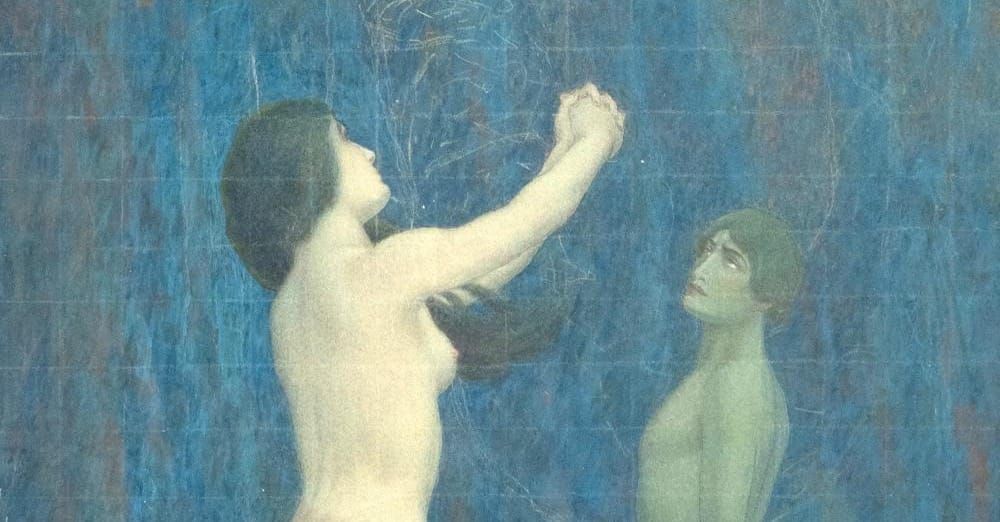
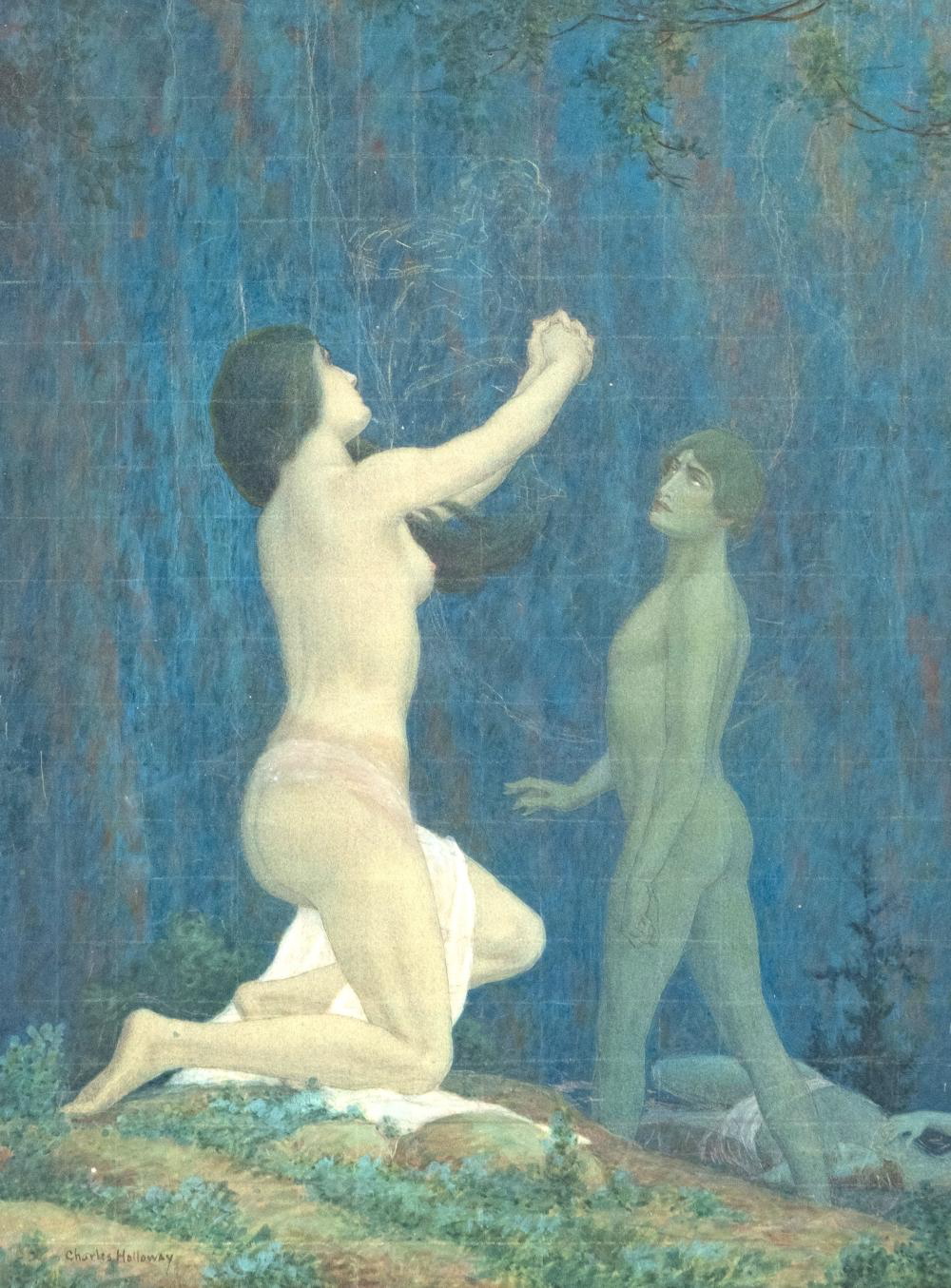
けれど、感情はそう簡単には静まりません。私たちをのみ込んでしまう。アメリカ中西部の壁画家チャールズ・ホロウェイによる、この幻想的な習作を見てください。これは、より大きな作品The Joys of Living (1913)のために描かれたものです。けれど、ここで目にするのは喜びではありません。私たちはむしろ、思い焦がれる一人の女性と同じ側に立っています。彼女は祈るように両手を上げ、懇願するような眼差しで天を見つめています。そして、私たちが青いヴェールと呼ぶことにする、その向こうには一人の男がいる。彼女の愛する人? それとも、彼女と「あの世」をつなぐ存在?
Maybe in the heart, in the mind -- in the ethers --, Mr. Hemingway is right. The spirit of family remains tethered to us if not literally, surely in longing. Surely in what we can call heart. That is the more rational end.
Feelings, however, do not abate easily. They consume us. Take this ethereal preparatory sketch from American midwestern muralist, Charles Holloway. The piece is for a larger work in The Joys of Living (1913). Yet, rather than witnessing joy, we are same-side as a woman pining away. She raises her hands as if in prayer. She stares to the heavens with a pleading look. And there, behind what we will call that blue veil, is a man. Her man? Her connection to the beyond?
下記の英文を日本語で読む
そして彼もまた、横目で見つめています。彼の姿は薄れていて、そのため、近くにいるにもかかわらず距離を感じさせます。けれど、このすべての中で――誰が、どこにいて、どういうことなのでしょう。彼は確かに生きている。それでも私たちには、幽霊のように見える。では彼から見れば、彼女は――そして私たちは――どのように見えるのでしょう。死によって隔てられた生。それでも、本当に終わってしまうことはない。そもそも、人は本当に死ぬのでしょうか。それとも、ただ私たちから、ほんの一つ隔てたところにいるのでしょうか。
And he: similarly, he looks askant. He is faded, thus giving us the sense of distance despite proximity. But yet, in all of this: who is where and how? He is very much alive but to us: ghostly. To him, she -- and we -- How must we look? Life separated by death but never really over. In fact, is anyone really dead or just one degree removed?
下記の英文を日本語で読む
「片隅のテーブルから
彼らには、生まれ変わる世界が見えていた
そして、声を響かせながら立ち上がった
今も、その声が聞こえる!」
[...]
「ああ、友よ、友よ、どうか許してほしい
僕だけが生き、君たちはもういないことを。
言葉にできない悲しみがある。
終わることのない痛みがある。
窓辺に浮かぶ幻の顔。
床に落ちる幻の影。
誰も座らない椅子、誰もいないテーブル。
そこでもう、友たちが集うことはない。」
そう! まさに、ここで働いているのはこの感覚です。そのほうが、ずっと人間として腑に落ちる。Mr. Antoineが歌うものを、今ならもっとはっきり理解し、思い描くことができます。理解してはいない。けれど、知っているということ。
Yes! That is the dynamic at play. That feels much more humanly comfortable. We can understand and visualize what Mr. Antoine sings so much more clearly now: not understanding but knowingness.
From the table in the corner
They could see a world reborn
And they rose with voices ringing
I can hear them now! [...]
Oh my friends, my friends forgive me
That I live and you are gone.
There's a grief that can't be spoken.
There's a pain goes on and on.
Phantom faces at the window.
Phantom shadows on the floor.
Empty chairs at empty tables
Where my friends will meet no more.
下記の英文を日本語で読む
それは美しく――そしてどこか心に影を落とすような――別の世界へのつながりです。多くの人にとって、確かに現実として感じられるつながり。ベルリンを拠点に活動する日本人アーティスト、塩田千春もまた、その世界、あるいは少なくともその力学を、壮大なインスタレーションの中で際立たせています。2020年の作品Counting Memoriesを見てみましょう。
It is a beautiful -- if not haunting -- tethering to another world; a connection very much real to so many of us. A world or at least dynamic that Berlin-based Japanese artist Chiharu Shiota underscores in her monumental installations. Take her 2020 piece Counting Memories.
下記の英文を日本語で読む
ここでは、人や目に見える生を越えて、そこにあるのは考えや記憶です。二つの世界が、何か不思議なエネルギーによって結ばれている。そこに見えてくるのは、私たちの愛情を映し出す一つの視覚的な枠組みです――生きているものと、そうでないものとのあいだにあるもの。机をひと目見るだけで、そこで学んできた無数の魂を、見るように、感じることができます。けれど、彼らに顔はない。ただ、身体を持たない気配だけがある。
そう。これです! まさに、これ。
Here beyond people and tangible living are the ideas and memories: two worlds linked in some mysterious energetic way. It gives us a visual framework for our affections -- between things animate and not. Just one look at the desks and you can see, feel the countless souls that have studied there. But they have no faces, just bodiless presence.
Yes. That's it! Fully that.
見えぬもの見え深沈と夜半の夏
−–富安風生
May the air whisper kind, beautiful things.
-Derek
P.S.: You can explore the inspiration for this famous Les Mis soliloquy in song from Victor Hugo's own novel. The important passage is on page 192.