SEEDS of THOUGHT: 新緑を見つける
The Language of the New Green — Experiencing the Season Come into View
Set the Stage
桜の季節がひと段落すると、視線は少しずつ山や木々へ向かいます。花の華やかさが去ったあと、今度は葉がほどけるように開き、あたり一面がやわらかな緑で満ちていきます。日本語では、そうした山の姿を「山笑ふ」と表します。
この種では、unfurl, leaf out, come into view, luminous, translucent のように、春の半ばに現れる「新しい緑」を英語でどう捉えるかを見ていきます。ただ自然を説明するのではなく、実際に外に出て、何が立ち上がり、何が見えてきているのかを観察し、その変化を英語でどう表せるかに意識を向けます。
英語を見る
Spring does not end with the cherry blossoms. After the petals fall, attention begins to shift toward the hills, the trees, and the first fresh green. In Japanese, this can be captured in the phrase yama warau — my rough translation: “the mountains laughing.” Whether adequate or not, the intent is clear. The landscape takes on something joyful, awake, and full of life.
For this week’s deep dive, we employ expressions such as unfurl, leaf out, come into view, luminous, and translucent to describe the new green of mid-spring. The goal is not simply to describe nature, but to get outside, notice how it begins to appear, how it changes, and how that change can be expressed in English.
Words for the New Green
Here are some words to help you. (Study Portal Here.)ほどけるように開く
葉が出そろい始める
見えてき始める
現れ始める
突き抜けるように現れる
光を帯びた、明るく輝く
光をやわらかく通す、半透明の
陽ざしに洗われたような
輪郭のはっきりした
はっきり意識される、目に留まる
ふと目にする
強く印象づけられる
語彙の日本語ヒントを見る
少しずつ見えてくる緑、光、輪郭、気配を英語で捉えるための語彙です。変化の途中を描写するときに役立ちます。
Your Inspiration
Over the coming week, train your attention.
Watch what begins to emerge, what starts to register, and what slowly comes into view.
1. Step outside and find the threshold.
Look for a place where green is only just beginning — a tree at the edge of leafing out, a hillside turning softer shades of color, a branch that has only recently begun to unfurl.
Capture it with a sketch, a haiku, a photo — and render it in your traveler’s notebook, on your favorite stationery, in a digital notebook, or on social media.
日本語を見る
緑がまだ出始めたばかりの場所を探してみましょう。葉がようやく開き始めた木、色がやわらかく変わりつつある斜面、つい最近ほどけ始めた枝先。
スケッチでも、俳句でも、写真でも構いません。トラベラーズノート、お気に入りの便箋、デジタルノート、SNSなど、自分に合う形で残してみてください。
2. Return to the same place.
Come back a day later, or two days later, and look again. Has the green deepened? Have the edges become clearer? Has something new begun to register?
Keep a short record in English, even if it is only one or two sentences each time.
Then find a parallel in art. Choose one work and study it with the same intention. For example: van Gogh’s Green Wheat Fields, Auvers (1890),
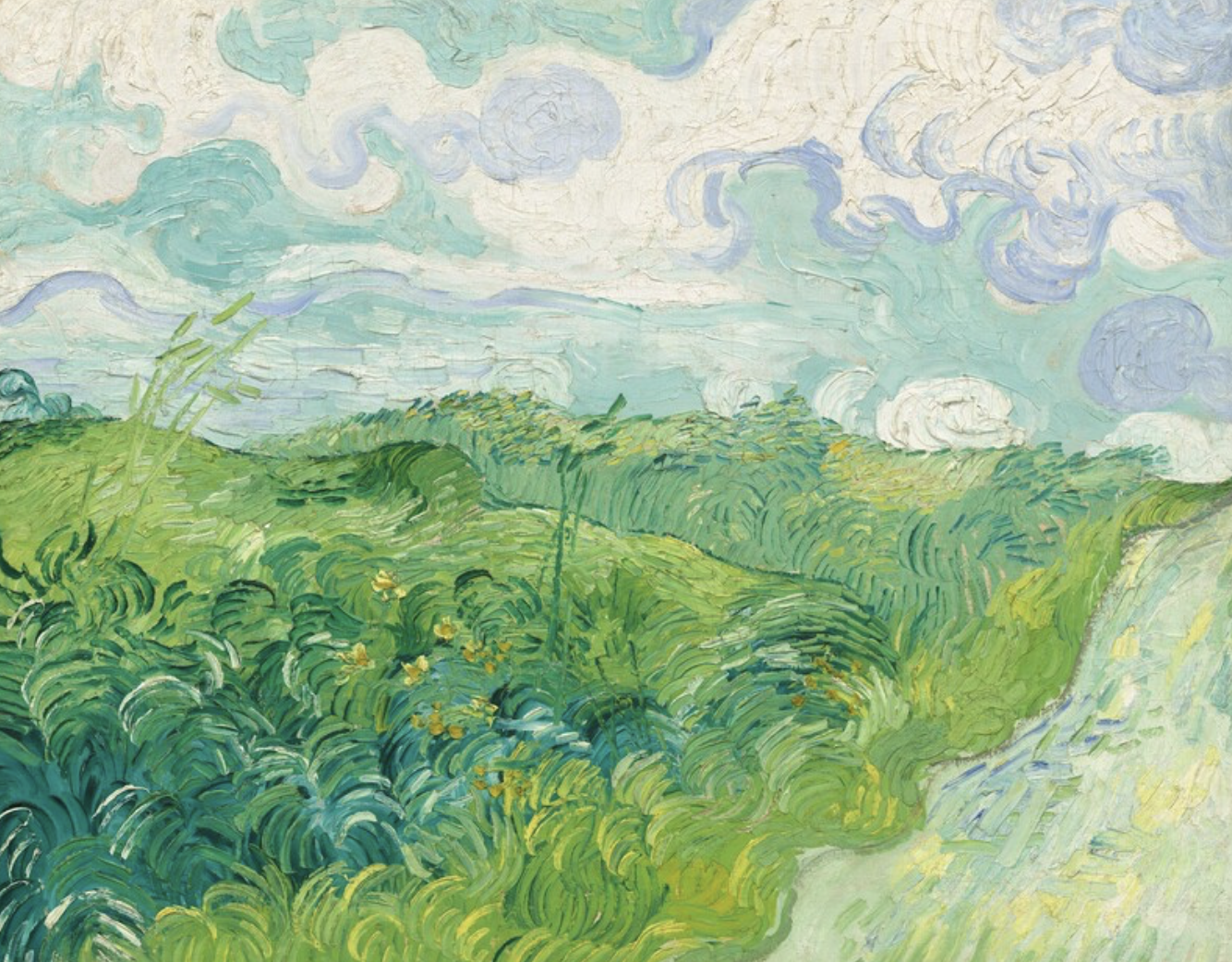
or a contemporary landscape from an exhibition at the Sakura Museum (Tokyo).
日本語を見る
一日後、あるいは二日後に、もう一度同じ場所を見に行きましょう。緑は濃くなっているでしょうか。輪郭はよりはっきりしてきたでしょうか。前には見えなかったものが、新しく意識にのぼってくるでしょうか。
そのたびに、英語で短く記録します。一回につき一、二文で十分です。
そのうえで、美術の中に並行するイメージを探してみましょう。ひとつ作品を選び、同じまなざしで見てみます。たとえば、ゴッホの Green Wheat Fields, Auvers(1890)や、東京の佐倉市立美術館で現在紹介されているような現代の風景作品もよいでしょう。
3. Plan the encounter.
Before going out, explore places known for this quality of light and green:
— Shenandoah National Park (Virginia, USA) — rolling hills, soft early green
— The Cotswolds (UK) — layered countryside, clear-edged light
— The Black Forest (Germany) — deep forest greens, filtered light
Notice how these places are described. What words recur? What kind of light do they suggest?
Then bring it back to your own environment. Where can you go this weekend — even locally — to experience something similar?
Use the vocabulary actively: translucent, luminous, clear-edged, sun-washed, newly emerged.
日本語を見る
いきなり出かけるのではなく、まずは新緑の光や空気感で知られる場所を調べてみましょう。
— Shenandoah National Park(Virginia, USA):なだらかな丘陵と、やわらかな春の緑
— The Cotswolds(UK):層をなす田園風景と、輪郭のはっきりした光
— The Black Forest(Germany):深い森の緑と、木漏れ日のような光
それぞれの場所が、どんな言葉で描かれているかを見てみてください。どんな光が想像されるでしょうか。どんな語が繰り返されるでしょうか。
そのうえで、自分の週末に引き寄せます。自分の暮らしの近くで、似た気配を感じられる場所はどこでしょうか。
ここでは次の語を意識して使ってみましょう。
translucent, luminous, clear-edged, sun-washed, newly emerged
4. Go and experience it.
You planned it. Now go.
Experience the place first as it is — the light, the air, the movement of the trees. Then notice how it sits alongside your own activity: walking, talking, resting.
Carry one question with you:
At what point does this place begin to feel alive?
Later, describe that shift in English. Keep it simple, but precise. Japanese, of course, is welcome as well.
日本語を見る
計画したら、実際に出かけてみましょう。ひとりでも、友人とでも、家族でも構いません。
まずはその場所そのものを感じます。光、空気、木々の動き。次に、その風景が自分の行為とどう重なっているかにも目を向けてみましょう。歩くこと、話すこと、休むこと。その背景としてどう立ち上がってくるでしょうか。
持っていく問いはひとつです。
この場所が「生きてきた」と感じられるのは、どの瞬間か。
あとで、その変化を英語で描写してみてください。簡潔でよいので、できるだけ正確に。日本語で書き留めるのももちろん歓迎です。
Bring It Together
Finally, bring your observations together in your journal — digital or otherwise. Take a final look. Refine it. Let the memory settle.
What music runs through your mind that best captures the experience of the week? Share it. Return to it. If nothing comes to mind, explore my selection.
日本語を見る
最後に、この一週間の観察をひとつにまとめてみましょう。デジタルでも紙でも構いません。最後にもう一度見返し、少し整え、記憶が自分の中に落ち着いていくのを待ってみてください。
今週の体験をもっともよく動かしてくれる音楽は何でしょうか。思い浮かぶものがあれば、もう一度聴いてみましょう。誰かに共有してもよいですし、まだ浮かばなければ、プレイリストもどうぞ。
季節の見え方を英語で深めたい方は、スタディポータルへ。
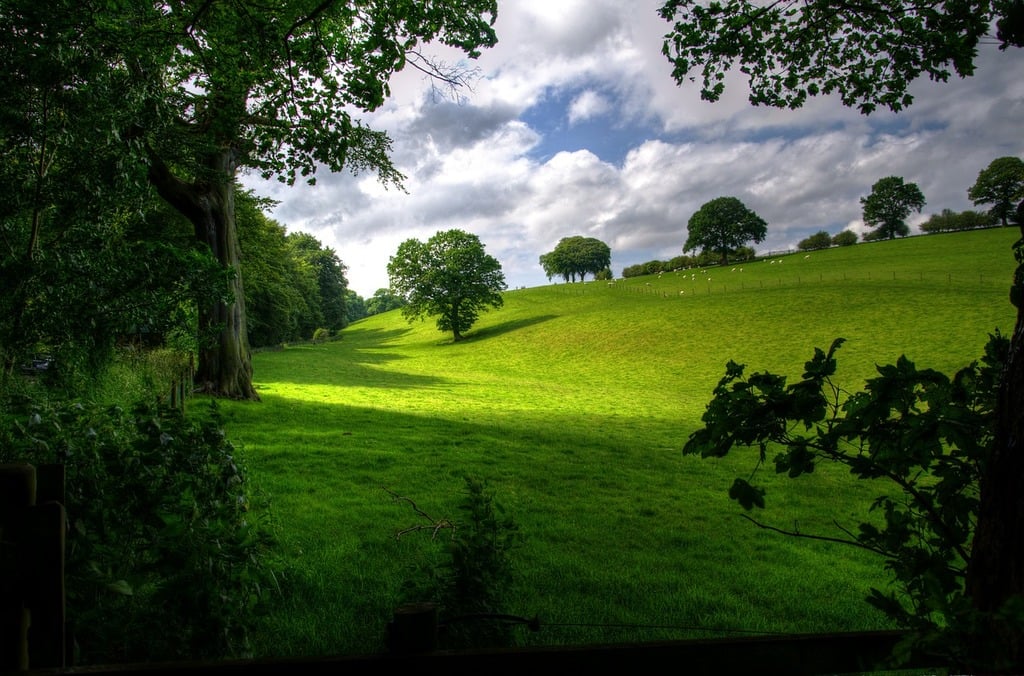
TOP IMAGE: The green fields of the cotswolds
Author